
Materials and colours
Select Material pulls from your library; Colour Variants offers swatches that drive material properties.
Product Configurator
Simplio3D uses a block architecture: every option, rule and price is a block you add visually, so a working configurator comes together in an afternoon rather than a project.
No credit card required
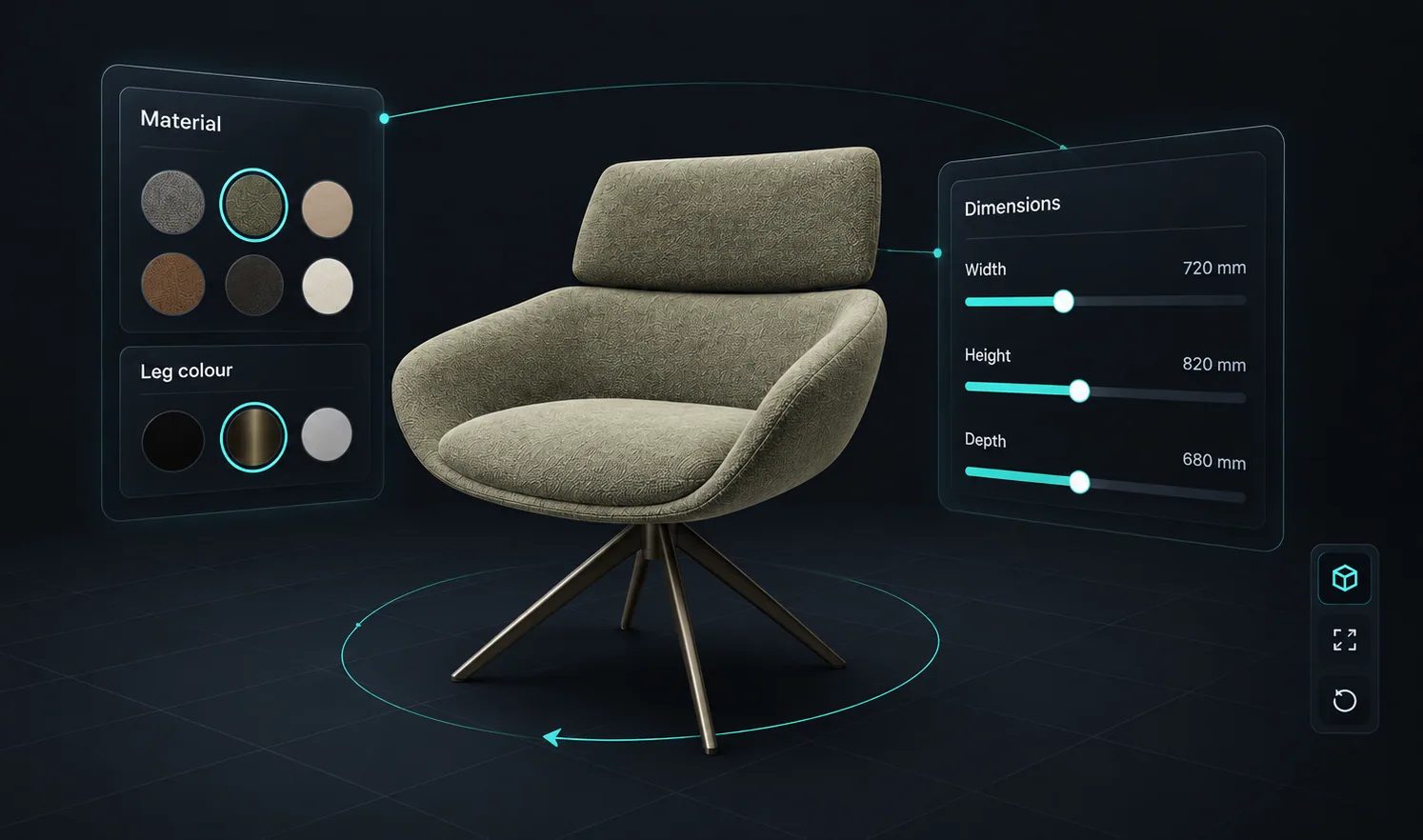
Select Material pulls from your library; Colour Variants offers swatches that drive material properties.
Show/Hide Objects toggles whole models or individual meshes so parts appear only when they apply.
Number Input takes a quantity or a dimension and scales the model on the X, Y or Z axis.
Dropdown Select, Thumbnail Selector, Carousel and Toggle Switch cover the ways people pick from a set.
Text Input with font selection, Image Upload for customer artwork, plus the Design Canvas and Pattern Designer.
Scenery switches backgrounds and camera settings; Hotspots add information markers on the model.
See how users score Simplio3D across the major software review platforms.

4.6/5

4.3/5

9.5/10
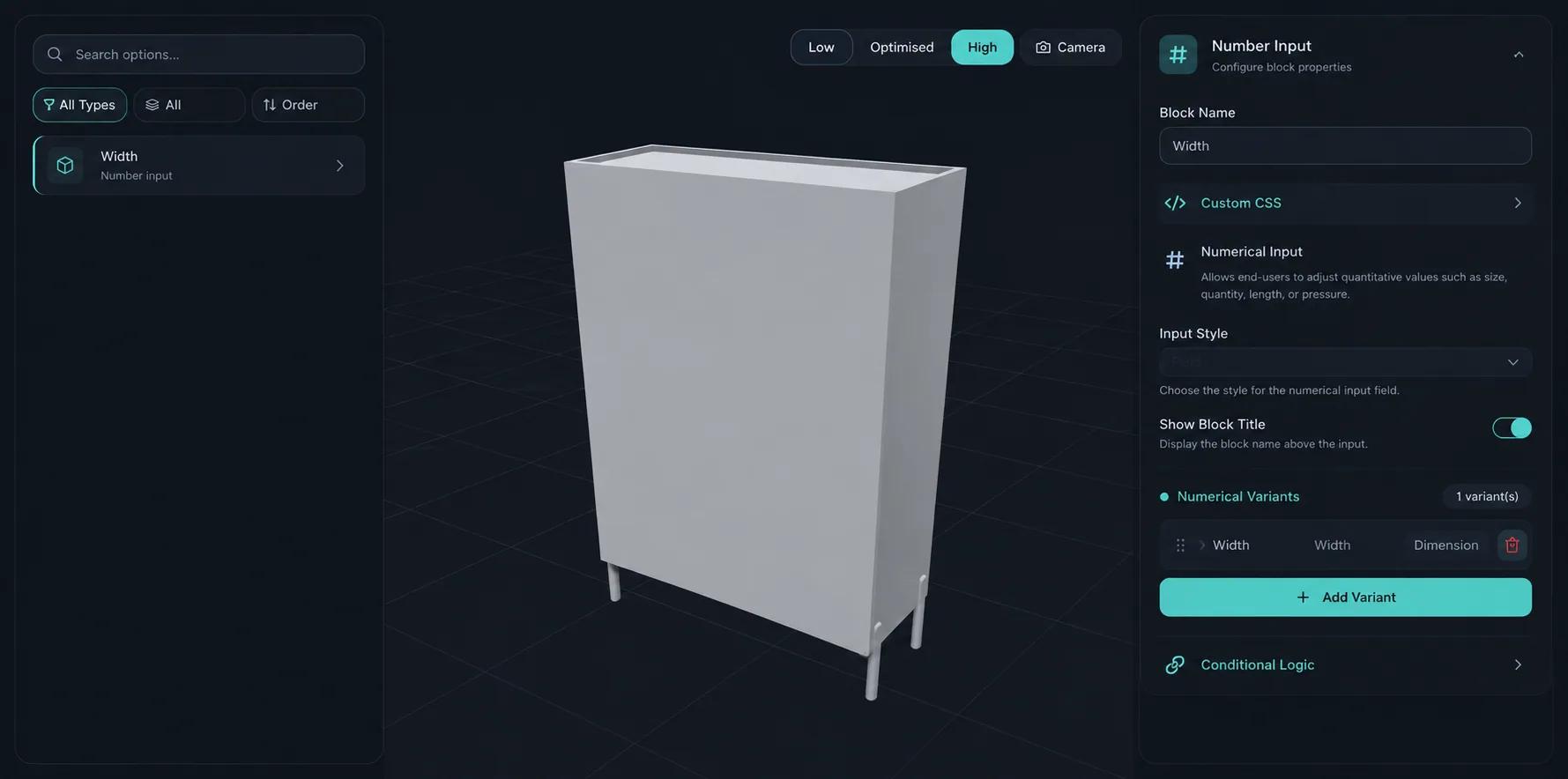
Most configurator projects fail on the second product. The first one gets built as a bespoke piece of software, and the second needs the same effort again because nothing was reusable. Simplio3D avoids that by making every part of a configurator a block: option blocks for what customers choose, logic for what constrains them, price blocks for what it costs. Building the second product is assembly, not development.
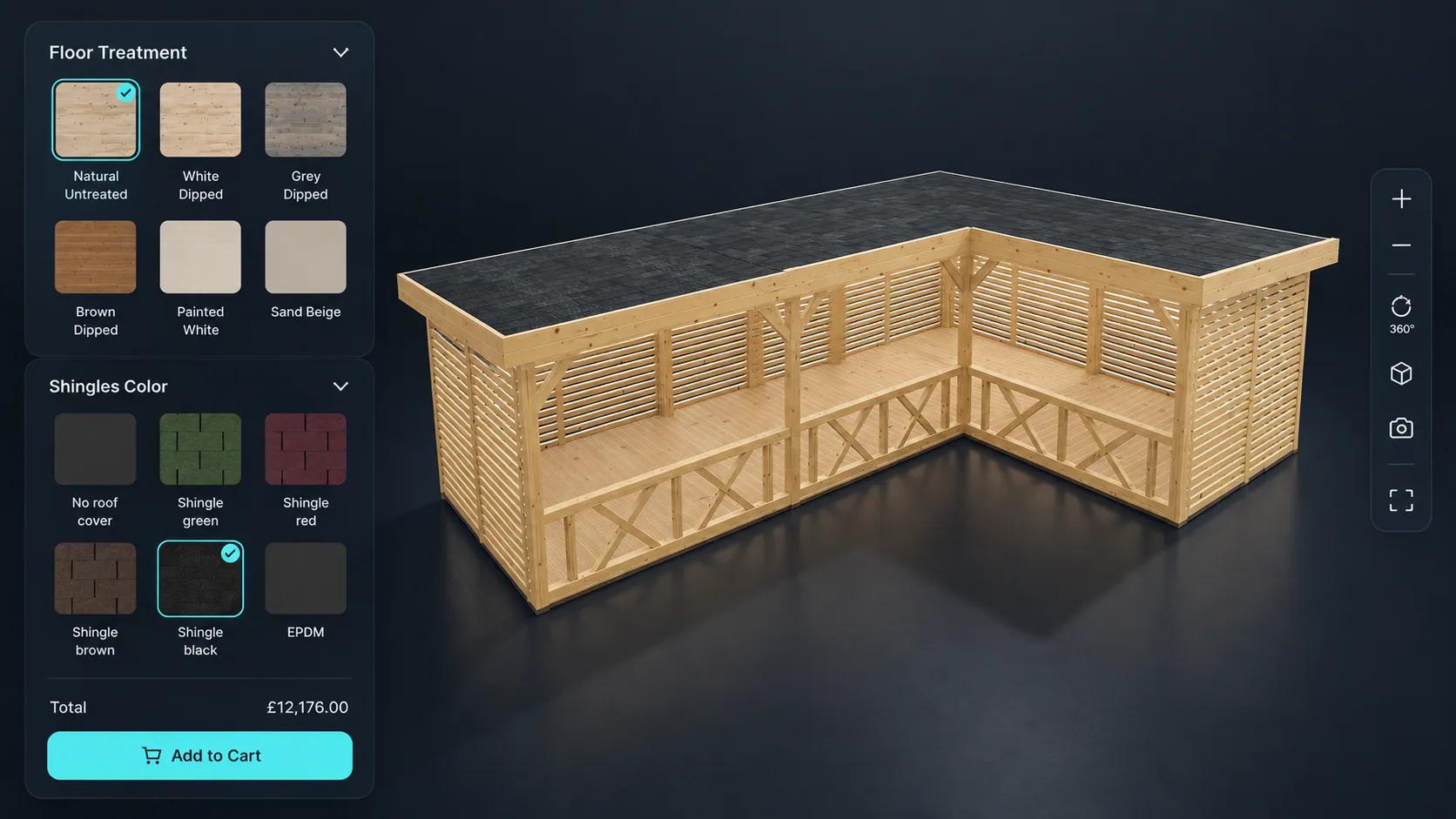
A Viewer presents a finished product with no options — right for showcases and portfolios. A Configurator adds options, conditional logic, pricing and quote forms; both are included from the Starter plan. A Modular project lets customers assemble 3D modules with drag-and-drop, snap points, rotation and mirroring — the advanced modular system is an Enterprise capability. The project type is fixed once a project is created, so it is worth choosing deliberately.
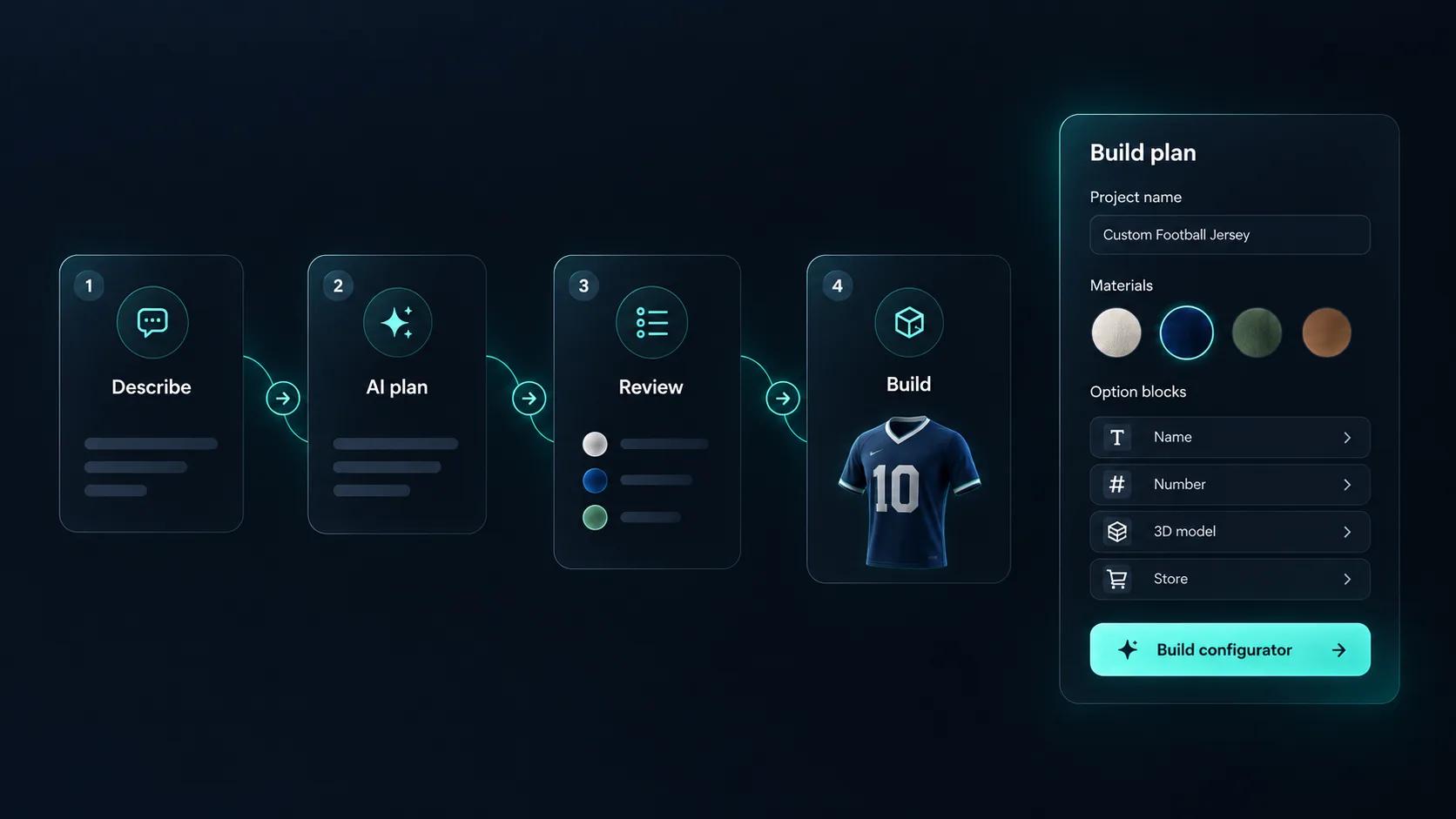
A blank project is the slowest part of building a configurator. Simplio3D can generate a working configurator from a product description, giving you a structure to refine instead of authoring every option by hand. The AI assistant can then audit what you have built, reviewing option coverage and conditional logic. And through the MCP server, an assistant such as Claude can connect with a scoped token to inspect real projects, evaluate logic and calculate prices — proposing changes under a confirm-and-snapshot model rather than editing silently.
Five steps, no code, and nothing that requires a 3D background beyond the model itself.
Import GLB, GLTF, FBX, OBJ, STL, DAE or a ZIP archive, and organise the scene so the parts you want to control are separate.
Build PBR materials from your texture maps, or start from library recipes for metals, woods, fabrics, glass and plastics, then bulk-add them by category.
Assemble the controls customers will use from the sixteen block types — swatches, dropdowns, toggles, dimension inputs, text and image upload.
Conditional logic keeps combinations valid; price blocks and the formula editor produce a total that follows the configuration.
Enable the share link, copy the iframe snippet, and place it on your site — or send configured products to a WooCommerce or Shopify cart.















No. Models, materials, options, logic, pricing and publishing are all handled visually in the editor. A REST API and TypeScript SDK exist for teams that want headless control, but they are optional.
GLB, GLTF, FBX, OBJ, STL and DAE, plus ZIP archives bundling a model with its textures.
Sixteen, covering material and colour selection, part visibility, dimension inputs, dropdowns, thumbnails, carousels, toggles, hotspots, scenery, text input, image upload, pattern design and freeform graphic placement.
Yes. Model versioning replaces the 3D file while preserving the configuration built around it.
Project settings cover display, branding and integration options — over 140 of them — and a custom UI can be built on the viewer package if you need full control.
There is a 30-day Pro trial, and the Viewer project type is available on all plans.
Turn a configurator into a full configure-price-quote flow with rules, formulas and quote capture.
Send configured products to the WooCommerce or Shopify cart at the calculated price.
Twenty-one industry pages covering furniture, buildings, doors and windows, apparel, footwear, jewellery and sports equipment.
Own a 3D product configurator to drive sales and generate proposals directly from your website